

In a quiet studio in Mumbai, architects Bhakti Loonawat and Suyash Sawant are nurturing an idea that could change how the world thinks about design. Their firm, Anomalia, doesn’t just create — it grows. Their furniture and design elements are made from mycelium, the root structure of mushrooms, and are designed to decompose back into the soil within 180 days.
“It wasn’t one big eureka moment,” Bhakti says with her characteristic calm and conviction. “Anomalia is a culmination of our experiences from over 12 years in architecture and design. We realized our profession is one of the largest contributors to waste and emissions — from how materials are sourced to what happens to them at the end of their life.”
That thought — how can we build responsibly? — became the foundation of Anomalia.
The science of growing design
Mycelium is the intricate, web-like root system of fungi. “What we eat as mushrooms is the fruiting body,” Bhakti explains. “Everything below it — that’s mycelium. It feeds on cellulose, which is why we mix it with agricultural waste like straw or rice husk.”
The process sounds like alchemy. The crop waste is broken down, mixed with a mycelium culture, and placed in a mold that shapes its growth. “We don’t let the mushroom sprout,” she laughs. “We stop it at the right stage, then bake it at less than 100°C for a day. That makes it inert — it stops growing and becomes a lightweight, solid block.”
The result is a natural, compostable material that can be molded into furniture, panels, or even architectural facades.
Durable yet degradable
Bhakti’s team ensures their designs are both durable and biodegradable. “For indoor use, we use the same coatings as wood. For exteriors, we’re experimenting with lime plaster — a natural material. When the block’s life is over, you break it down, compost it, and it enriches the soil. We’ve tested the pieces for about 10 to 15 years of indoor durability.”
She makes a practical point most of us overlook: “People often say they want furniture to last a lifetime. But realistically, we replace it every 10 or 15 years. So why not create something that lasts as long as you need — and then returns safely to the earth instead of ending up in a landfill?”
Pushing the limits of mycelium
To refine their material, Anomalia collaborates with MYCL, an Indonesian company specializing in mycelium technology. Together, they’ve created blocks that are lightweight — just 1.5 kilos — but can withstand 1.5 tons of compressive load. “We’re still learning and testing,” Bhakti says, “but our goal is to show that this can be structural, beautiful, and sustainable.”
That spirit of curiosity started in the most humble setting: their kitchen. “People imagine we began in a lab,” she laughs. “But our first experiments were in the kitchen. The first batch was a success — then came failures as seasons and raw materials changed. Each attempt taught us something about what mycelium needs to thrive.”
She smiles as she recalls redesigning molds so that “the mycelium would be happy.”
Two minds, one mission
Bhakti co-leads Anomalia with her partner Suyash Sawant. “We both handle the creative side,” she says. “But Suyash also takes care of the business end. We’re still a small team — just five of us — so everyone wears multiple hats. One day you’re designing; the next, you’re figuring out how to ship blocks across the country.”
Their partnership extends beyond logistics. Together, they’re redefining what it means to be architects — not just building structures, but nurturing systems that live and breathe.

Partners- Suyash and Bhakti
When design connects us to the earth
Recently, Anomalia’s work was showcased at the Seoul Biennale, curated by the legendary Thomas Heatherwick. “It was an outdoor exhibit, and we wanted people to interact with it — to touch, feel, even smell it. Mycelium has this earthy aroma that reminds you of where it comes from.”
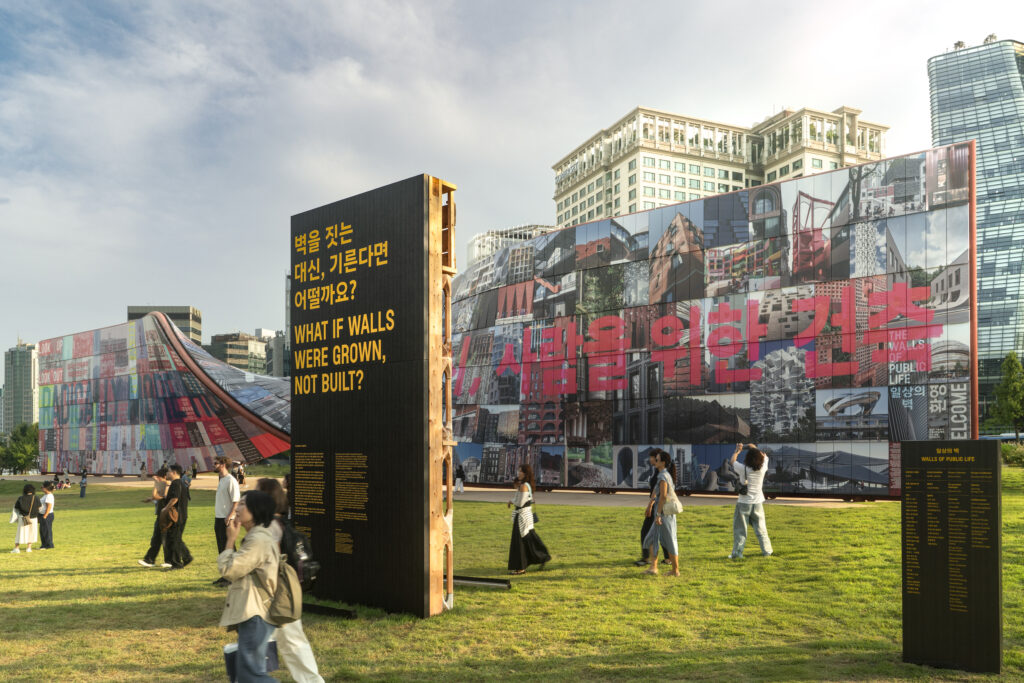
Seoul Biennale
She noticed something deeper as people engaged with the installation: “You realize you’re part of a larger ecosystem. Mycelium connects everything under the soil. When you see that, you understand that design, too, can be a way of reconnecting with the planet.”
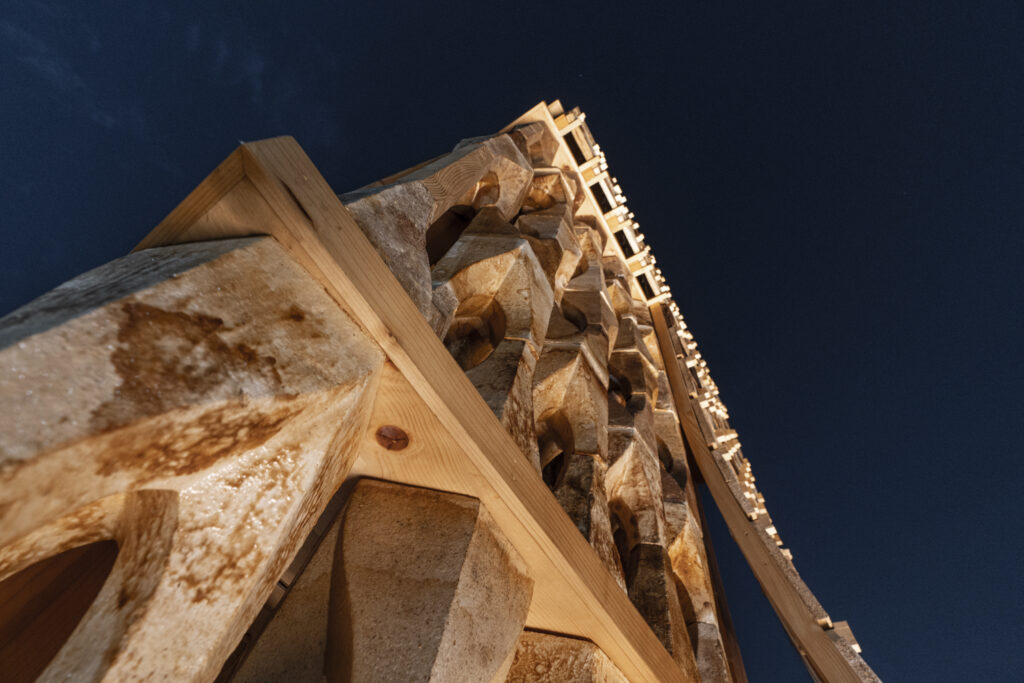
Seoul Biennale
A journey that’s just beginning
From their kitchen experiments to international exhibitions at Venice and Seoul Biennale, Bhakti and Suyash have seen their material — and message — travel far. “Our goal has always been to bring this material into people’s daily lives,” she says. “We want sustainable design to be the norm, not a fashionable tag.”
When asked to finish a sentence for Great Stories, “Design can be….?”
Bhakti pauses, smiles, and says:
“….can be radical yet responsible.”
And that, in one line, captures what Anomalia stands for — a reminder that innovation doesn’t have to harm; sometimes it just has to heal.