
Yap’s Hardcore Economy: Where Money is Heavier Than Your Problems
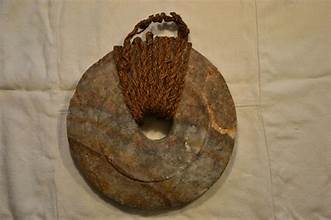
In the remote Micronesian island of Yap, money doesn’t fit in wallets—it requires a team of strong backs and a serious lack of concern for practicality. Enter the Rai stones, Yap’s famous currency, which are essentially oversized doughnuts made of limestone, some as large as a car. Imagine paying for coffee with a currency that doubles as a lawn ornament.
Big Money, No Movement
Unlike the flimsy paper we use today, Yapese money isn’t something you carry—it’s something you point at. Ownership changes through a verbal agreement, not physical exchange, because, let’s be honest, nobody wants to move a 10-foot rock just to buy a goat. In fact, some stones are at the bottom of the ocean, lost in transit centuries ago, yet they still hold value because, well, everyone remembers they exist. It’s like losing your credit card but still being able to use it because your neighbors vouch for you.
The Ultimate Flex
Carving these massive stones was no easy feat. They were quarried from Palau, some 250 miles away, and transported on rafts. This arduous process gave them value—the larger and more difficult the journey, the richer the owner. It’s the ancient equivalent of saying, “I own an original Picasso,” except it’s a giant rock, and moving it could crush your house.
A System That Still Rocks
Though modern currency has taken over, Rai stones remain a respected cultural symbol. They remind us that money’s worth is based on trust, whether it’s a gold coin, a dollar bill, or a giant immovable rock. So next time your bank charges a ridiculous transaction fee, remember—at least you don’t need a crane to pay your bills.
Sources
- Fitzpatrick, Scott M., “Quarrying and Transporting Yapese Stone Money: Experimental Archaeology in Micronesia,” Journal of Archaeological Science, 2003.
- Gillilland, C. H., “The Stone Money of Yap: A Numismatic Survey,” Smithsonian Institution Press, 1975.
- Krause, M., “The Economics of Giant Stones: Yap’s Unusual Currency System,” Economic History Review, 1998.